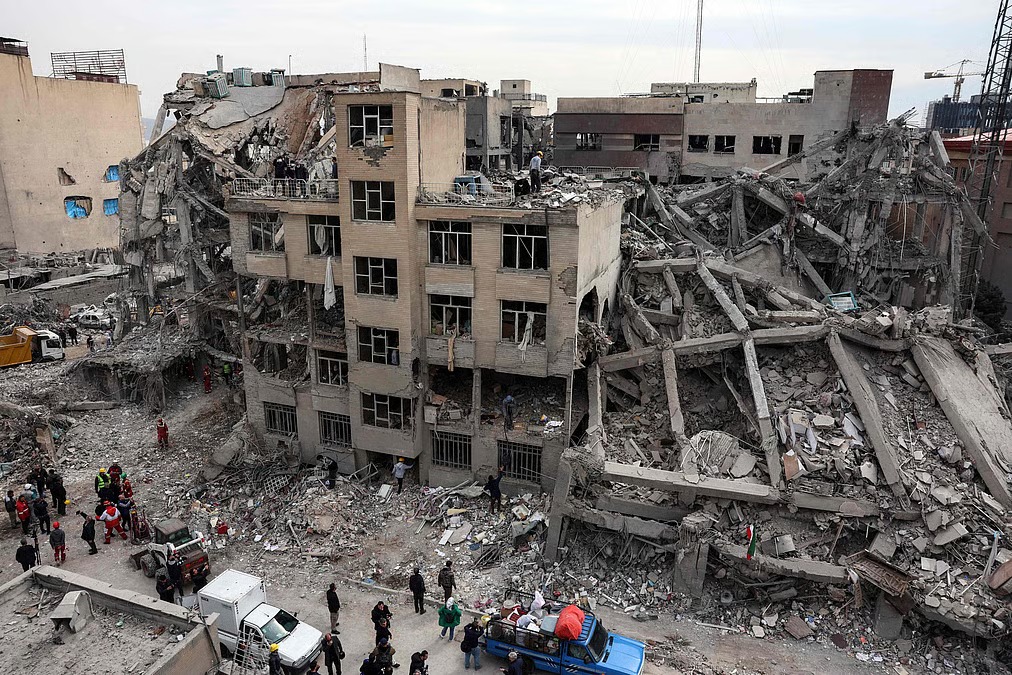
The ongoing conflict between the United States and Iran has entered its third week, disrupting global energy flows and intensifying political divisions in Washington as oil prices continue to rise.
Fighting around the strategically vital Strait of Hormuz — one of the world’s most important oil shipping routes — has raised fears of prolonged disruption to global energy supplies. The waterway carries a significant share of crude oil exports from Gulf producers to international markets, particularly Asia.
Speaking on CNN’s “State of the Union,” US Ambassador to the United Nations Mike Waltz said American forces had inflicted major damage on Iran’s military capabilities. Waltz claimed the US military had severely weakened Iran’s air force, air defense systems, and missile production capacity, describing the campaign as a decisive military success.
Waltz also said Iran was becoming increasingly isolated diplomatically, pointing to international support at the United Nations for condemning attacks on civilian infrastructure.
Meanwhile, US President Donald Trump suggested the conflict could continue as long as necessary. In remarks aired by Fox News, Trump said the duration of the war would depend on whether Washington’s objectives were achieved.
However, the conflict has sparked strong criticism from Democratic leaders in the US. Senator Cory Booker accused the administration of initiating military action without approval from Congress, calling the war a “unilateral” decision by the president that bypassed constitutional procedures.
Former US transportation secretary Pete Buttigieg also criticized the administration’s political leadership, warning that the economic effects of the conflict were already being felt by American households.
According to Buttigieg, the war has contributed to rising mortgage rates, higher food prices, and increasing fuel costs across the country as global oil markets react to instability in the Gulf region.
The Pentagon has confirmed that 13 US service members have died since the conflict began. Among them were six personnel killed when a refueling aircraft crashed in Iraq, with investigations into the cause of the incident still ongoing.
As fighting continues near the Strait of Hormuz, analysts warn that prolonged instability in the region could have far-reaching consequences for global energy markets and geopolitical stability.