
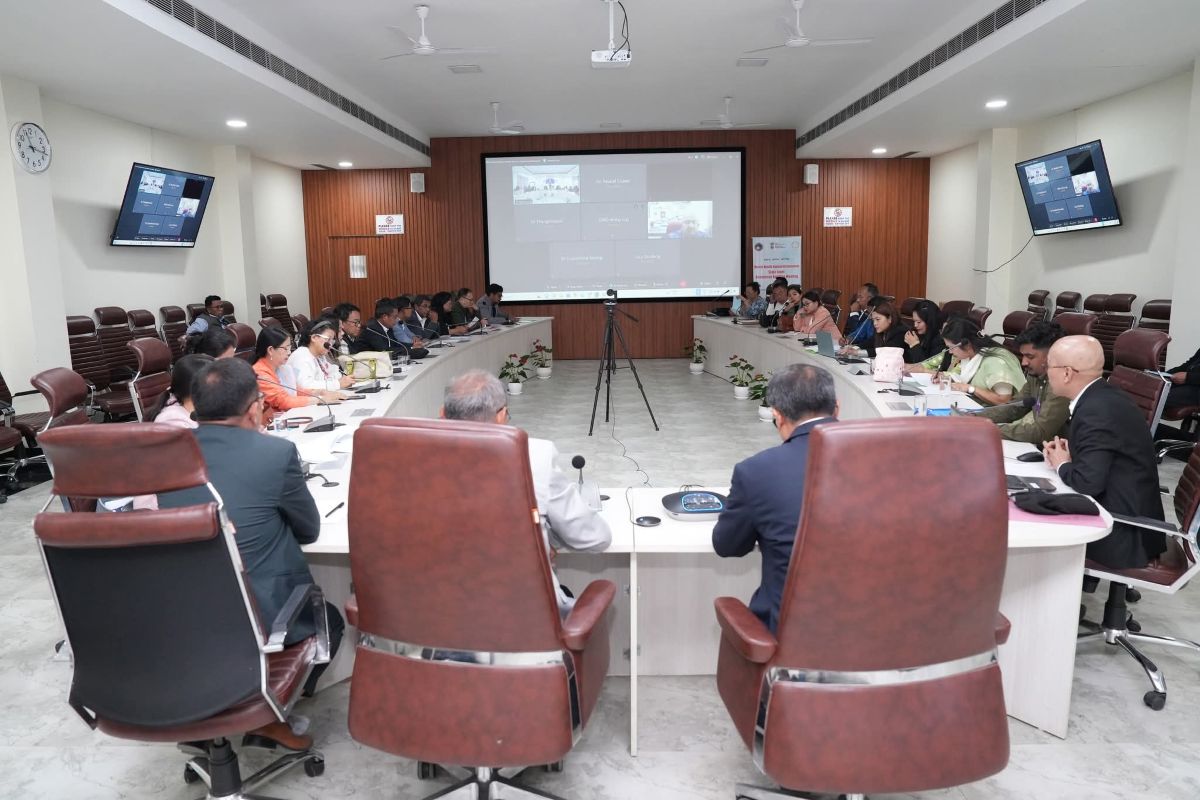
The State-Level Consensus Building Meeting for the Mental Health System Assessment initiative took place on Friday at Sushruta Hall, Regional Institute of Medical Sciences (RIMS), Imphal, and was attended by crucial stakeholders, including policymakers and health officials, to enhance the mental health system in Manipur. Distinguished attendees included Prof. G. Sunil Kumar Sharma, Director of RIMS, and Dr. N. Bino Singh, Director of Family Welfare, among others. The Principal Investigators of the National Mental Health Survey (NMHS-2), Brogen Singh Akoijam and Prof. S. Gojendra Singh, alongside Co-Principal Investigators, Dr. Mona Nongmeikapam and Dr. Laishram Jalina, played significant roles in the meeting.
Prof. G. Sunil Kumar Sharma articulated pride in RIMS’ engagement with NMHS-2, one of the largest mental health surveys globally, underscoring India’s pressing mental health issues and specific challenges faced in Manipur. He pointed out that the assessment’s focus will encompass various areas, including infrastructure, service delivery, governance, financing, and policy execution, and he stressed the importance of collaborative efforts beyond mere data collection.
Brogen Singh Akoijam provided an overview of the NMHS-2, detailing its objectives, methodology, and anticipated results, which will form the backbone for data-driven strategic planning and evidence-focused interventions for mental health challenges in the region. A Consensus Building Exercise, led by Akoijam and Visakh, the State Coordinator for NMHS-2 Manipur, encouraged stakeholders to contribute recommendations aimed at enhancing service delivery, accessibility, and the integration of mental health services into the overall public health framework. This collaborative dialogue signified an important stride towards bolstering the mental health infrastructure within Manipur.
Additionally, the Medical Society of RIMS, Imphal, conducted its 6th Scientific Session for the academic year 2025–26 at Banting Hall, which featured diverse research presentations across various specialties. Eight papers were discussed, followed by engaging dialogues moderated by senior faculty, underlining RIMS’ dedication to research excellence and interdisciplinary collaboration.