
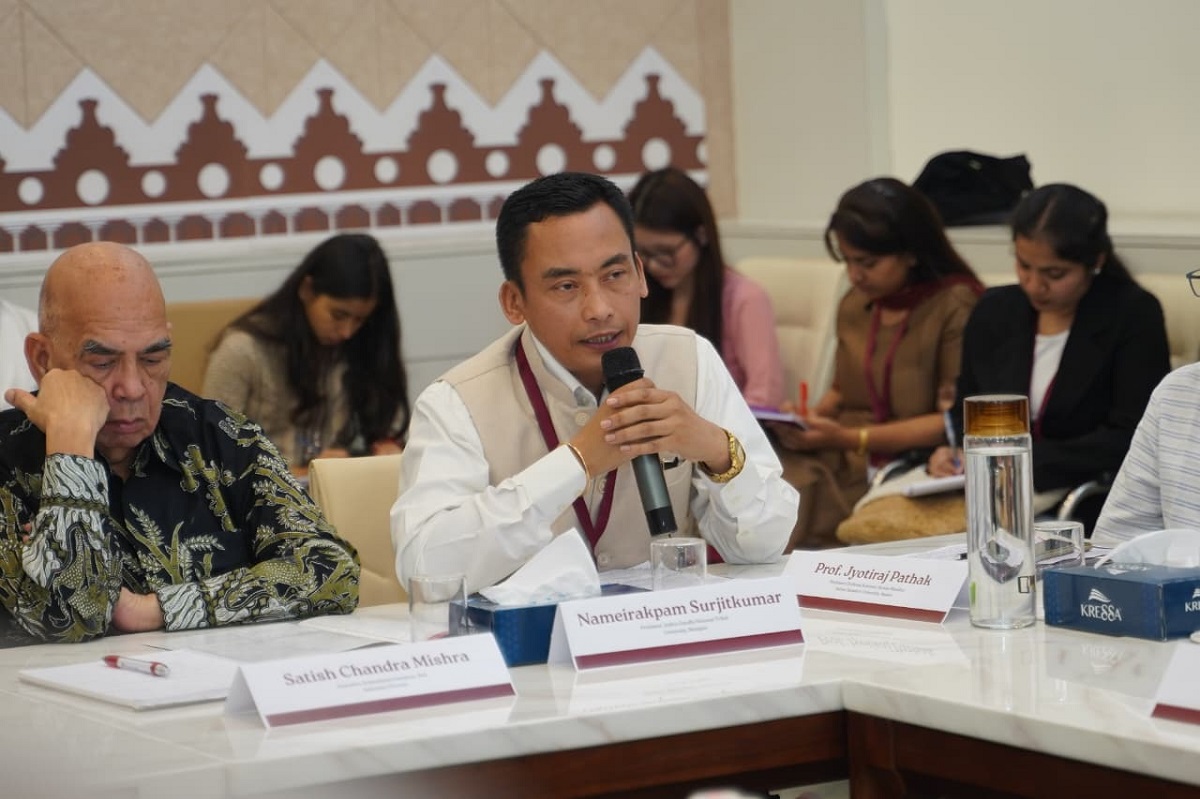
The Nalanda Development Dialogue held from March 8 to 9 at Nalanda University emphasized the need for Manipur’s development to extend beyond GDP metrics to encompass climate resilience, sustainable finance, inclusion, and cross-boundary cooperation, as articulated by Prof. N. Surjitkumar from Manipur. This inaugural event attracted delegates from various countries, highlighting cooperative policy-making in the current geopolitical landscape.
Particular emphasis was placed on North East India’s development strategy, showcasing localization of Sustainable Development Goals (SDGs) as a long-term objective. Prof. Surjitkumar characterized Manipur as a vital border state, noting its youthful demographics, rich biodiversity, and predominantly rural economy marked by geographic challenges including isolation and instability, counterpoised by robust community institutions and women-led markets.
He discussed Manipur’s role within India’s Act East Policy, positioning the state as a gateway to Southeast Asia, advocating for improved border trade and connectivity through strategic infrastructure enhancements like transport corridors and digital networks. He identified key prospects for economic development in trade of local products and communication improvements, particularly in regard to the India-Myanmar-Thailand Trilateral Highway.
Additionally, he outlined governance innovations under the leadership of Chief Minister Y. Khemchand Singh, focusing on peace-building initiatives, infrastructure improvements, and a significant budget allocation for women’s welfare. Prof. Surjit highlighted skill development and entrepreneurship, particularly through Meira Foods, a women-centric enterprise that marries traditional practices with modern processes. He also acknowledged the role of arts, culture, and sports in development, exemplified by The National Sports University.
Prof. Surjit concluded with a vision for 2040, proposing that Manipur could transform into a Green Border Growth Hub, exemplifying a model of ecological sustainability and integrated rural development through women-led industry and enhanced cross-border trade.