
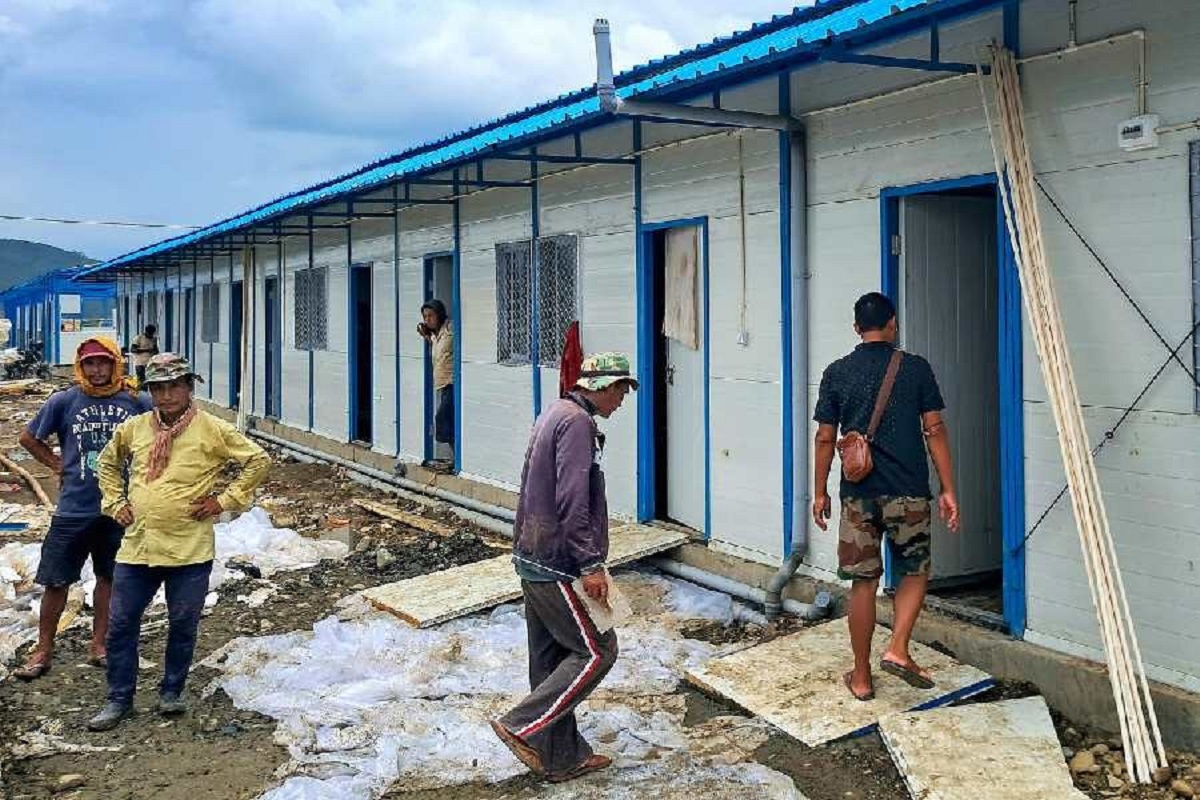
Despite ongoing ethnic violence in Manipur, displaced families are moving into newly constructed homes in Saron Hills, Churachandpur. The government has launched a three-phase rehabilitation plan to close all 360 relief camps and reintegrate the displaced population by December 2025. The plan, in coordination with NGOs and local community organizations, aims to provide better living conditions for IDPs who have endured poor hygiene, lack of healthcare, and economic instability. The Churachandpur MLA donated land for new shelters, funded by the VECA, showcasing a community-led development model. Resettled IDP Sharon Hill found living there more relaxing and refreshing than relief centers, as it allowed her to cook and carry out daily tasks. The initiative, supported by mobile medical teams, is demonstrating village-level cooperation and planning for peace and progress.
Health remains a significant concern in the region, with regular check-ups, immunizations, and mental health counselling provided to those affected by the conflict. The most urgent issue, according to Dr. Kasai, who oversees the Tubong aid camp, is financial uncertainty. Food is accessible, she said, but it becomes challenging when funds are required for things like transportation, medication, or reestablishing livelihoods. The transition to permanent housing is a good turn in Manipur’s protracted rehabilitation process, notwithstanding these obstacles. The goal is to restore stability and dignity to those who have suffered the most, and government agencies, churches, non-governmental organizations, and community leaders are working together to achieve this goal.