
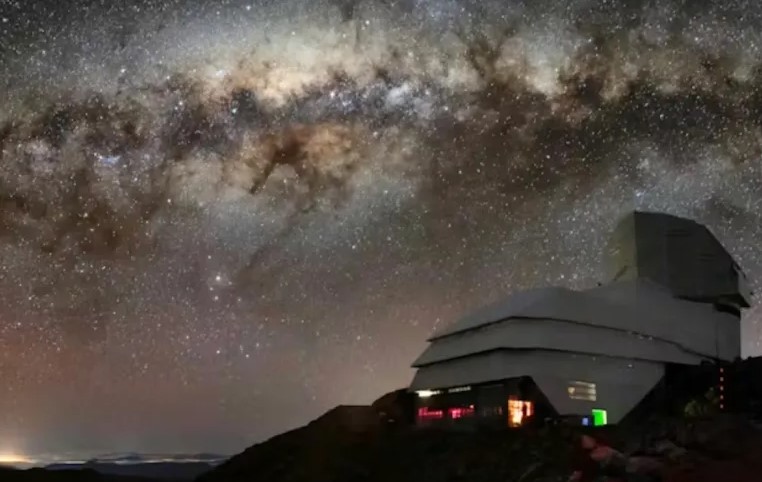
The field of astrophysics is currently undergoing a radical transformation as artificial intelligence shifts from a specialized tool to the primary engine driving cosmic discovery. For decades, astronomers have struggled with “the data deluge”—the overwhelming amount of information collected by high-powered telescopes that far exceeds human processing capacity. However, with the integration of advanced neural networks and deep-learning algorithms, scientists are now able to analyze petabytes of data from the James Webb Space Telescope and the Vera C. Rubin Observatory in a fraction of the time previously required. This AI-driven approach has already led to the identification of thousands of new exoplanets, the mapping of elusive dark matter filaments, and the detection of subtle gravitational wave signals that were once buried in background noise. By automating the classification of galaxies and the spotting of transient celestial events like supernovae, AI is essentially acting as a “super-eye,” allowing researchers to focus on the theoretical implications of discoveries rather than the tedious manual sorting of light-curves and pixel data.
Beyond mere data processing, AI is fundamentally altering our understanding of the universe’s origin and ultimate fate by enabling high-fidelity cosmological simulations. These AI-powered models can simulate billions of years of cosmic evolution—from the Big Bang to the present day—with unprecedented precision, helping physicists test theories about dark energy and the expansion of space-time. One of the most significant breakthroughs occurred recently when an AI model trained on cosmic microwave background radiation successfully predicted the distribution of matter in the local universe with an accuracy that challenged traditional mathematical models. Furthermore, AI is being used to “de-noise” images of distant, early galaxies, revealing structural details that were previously blurred by cosmic dust and atmospheric interference. As we move deeper into 2026, the synergy between machine learning and observational astronomy is not just accelerating the pace of discovery; it is providing a new lens through which we can perceive the fundamental laws of physics, making the once-impenetrable mysteries of the “Dark Universe” increasingly visible and understandable.