
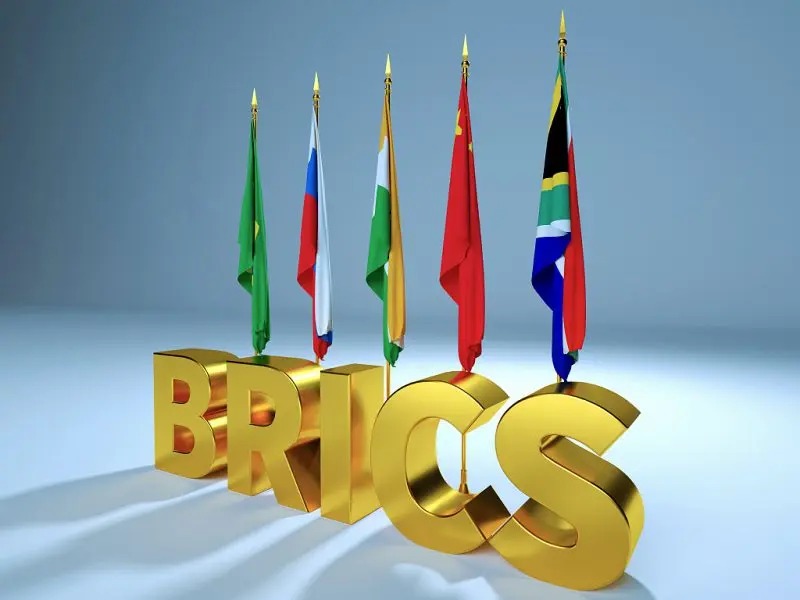
The BRICS grouping—Brazil, Russia, India, China and South Africa—is steadily reducing its reliance on the US dollar by increasing its focus on gold. While official data shows that BRICS nations together hold about 20% of global gold reserves, they and their closely aligned partners now account for nearly half of worldwide gold production, underscoring a strategic shift toward the precious metal.
Russia and China are at the forefront of this approach. In 2024, China produced around 380 tonnes of gold, while Russia contributed roughly 340 tonnes. Brazil also joined the trend, purchasing 16 tonnes of gold in September 2025, its first such acquisition since 2021. According to Anuj Gupta of Ya Wealth, BRICS countries are simultaneously boosting domestic production, limiting sales, and buying gold from global markets. Between 2020 and 2024, their central banks accounted for over half of global official gold purchases.
Experts say this strategy reflects deeper concerns about the dollar-centric financial system. Sachin Jasuja of Centricity WealthTech noted that the freezing of Russia’s reserves during the Ukraine war reshaped how nations view reserve safety, highlighting geopolitical risks tied to dollar assets. Since then, BRICS central banks—especially China, Russia and India—have sharply increased gold holdings, gradually trimming dollar exposure.
Alongside this, BRICS nations are settling more trade in local currencies, reducing dependence on the dollar. Ponmudi R of Enrich Money said the growing control over gold supply enhances strategic flexibility, positioning gold as a neutral, sanction-resistant asset. Together, these trends point to a gradual move toward a more diversified and multipolar global financial system rather than an abrupt end to dollar dominance.