
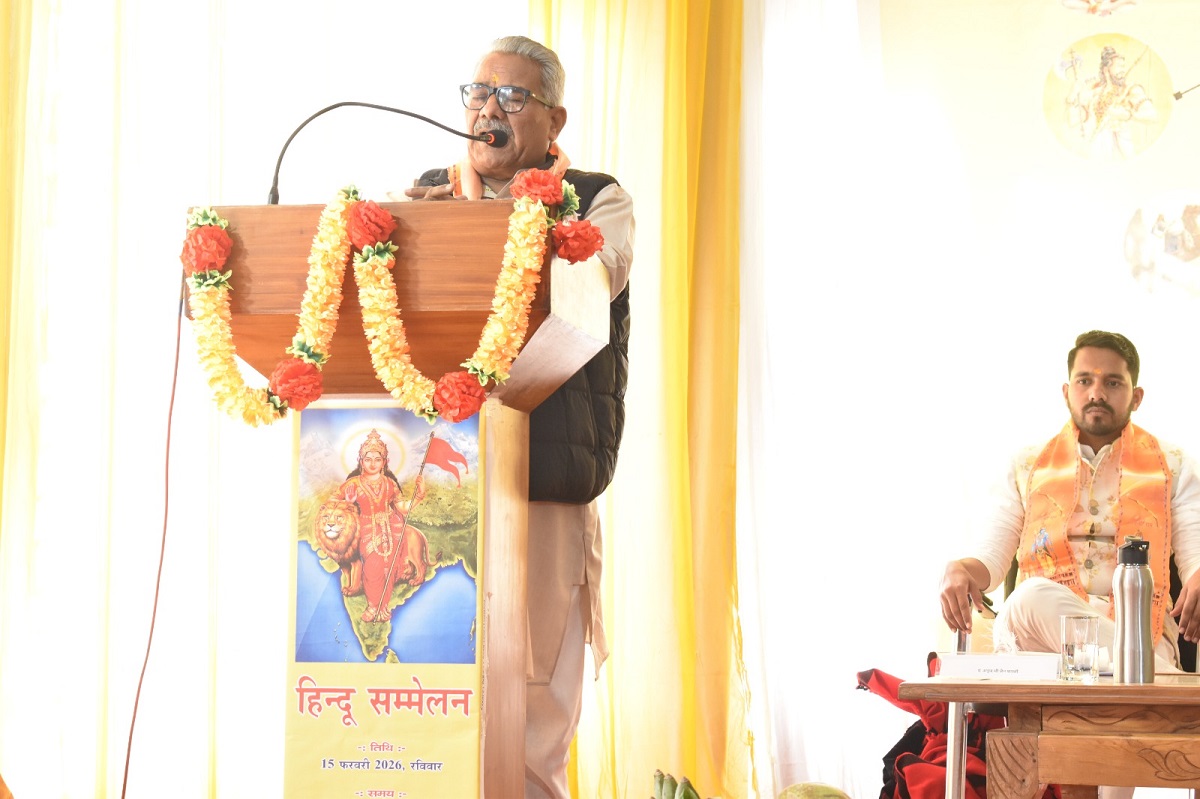
Dr. Krishnagopal Jee, Sah-Sarkaryawah of the Rashtriya Swayamsevak Sangh (RSS), conducted a two-day visit to Manipur on February 14–15, where he engaged with local communities to discuss national development and social responsibilities. His interactions included a significant session with the medical community at Bhaskar Prabha in Imphal West, organized by RSS Imphal Nagar, emphasizing the vital role physicians play in fostering a healthy society.
During his address, Dr. Krishnagopal traced the evolution of the RSS from its beginnings with one shakha in Nagpur to over 90,000 shakhas today, reinforcing the organization’s mission of promoting a strong and self-reliant Bharat. He highlighted India’s ancient intellectual heritage in areas such as grammar, mathematics, metallurgy, textiles, perfumes, and Ayurveda, noting how the nation, once a leader in education and innovation, now faces challenges in literacy and public health. The RSS aims to stimulate social awakening and nation-building to address these issues.
Dr. Krishnagopal acknowledged India’s impressive economic growth over the past decades, with GDP growth rates frequently exceeding 7–8 percent, and expressed optimism about India’s path to becoming a developed nation. He underscored the pressing health challenges and called on medical professionals to actively contribute to improving citizens’ health. He cited successful RSS initiatives, such as free eye-testing camps that dispensed over 165 lakh spectacles during the Maha Kumbha Mela, a ₹100 crore eye hospital in Nagpur, and a ₹300 crore charitable hospital in Vrindavan, as examples of the organization’s commitment to social responsibility.
He addressed specific health issues, including anemia and drug addiction, detailing RSS-led initiatives to combat these problems through community-driven awareness and treatment programs. Dr. Krishnagopal praised the establishment of the National Sports University in Manipur, urging the community to transform the state into a model of health and well-being rather than a center for drug addiction.
The National Medicos Organisation (NMO), recognized for its outreach in underserved regions, was commended for its role in fostering health care. Dr. Krishnagopal also acknowledged the significance of Manipur’s traditional diet but raised concerns over the growing popularity of fast food, advising both healthcare practitioners and the public to maintain healthy eating habits.
To effect practical change, he encouraged the local medical community to provide pro bono counseling and healthcare services in nearby colonies, targeting around 500 residents. He lauded local doctors for their voluntary medical outreach and urged them to persist in their service efforts.
The program concluded with an open discussion, allowing around 200 participating doctors from various fields—many of whom were Manipuri professionals working in India or abroad—to exchange ideas on enhancing the medical fraternity’s contribution to national health and public wellness initiatives.